
Substance
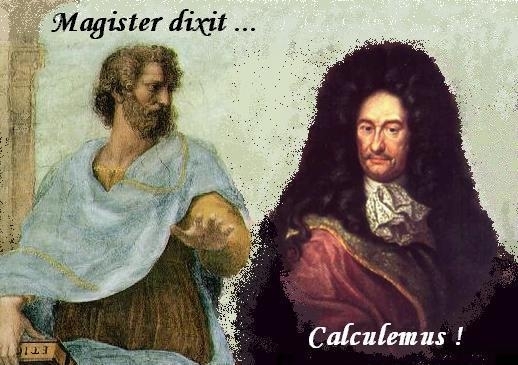
Wahl’s Big 2 Substance guys (Who connected their idea to their logic intimately), Magister Dixit, apparently meaning from the master, and calculemus, meaning let us calculate.
So, basics. Substance is that which stands under appearances/phenomena. That’s why Metaphysics is connected so intimately. (“Metaphysic’ as a title being an accident because it was the book following Aristotle’s Physics but it worked out well to describe what’s going on there).
Substance and essence are different. Substances are essences that exist. But they are supposed to be, in a way, independent of their properties. Therefore, the difficulty in a theory of substance is describing them without recourse to their properties while keeping them separate at the same time.
Pre Socratic Substance
Material Substances
It seems like Wahl shows his ‘rationalistic’ (In this case, I mean the philosophical attempt to make comprehesnive philopshical system) (For Wahl, his is fairly empirically minded insofar as its pluralistic but theres an apriiori dialectic between this and….) and spiritual (Which he’ll find in poetry and philosophy) dialectic. The material and spiritual were not seperate in the anicent greek world where the pre socratics thought that what was fundamental was a single kind of substance usually expressed as an element of some kind.Some of these aren’t strictly material, but you get it. And each retains the problem of substance according to Wahl, which is the split between it and its qualities, or appearance and that which is underneath it, and how to make this relationship stay while keeping substance individual:
“When Thales said that the water is full of gods, he was already introducing a cleavage between the water and the gods present m the water. Heraclitus too, in saying that the ‘•fire orders the things, and even that the Logos, which is the fire and the order of things, is apart from the things, introduced a dualism into his philosophy. The dualism is still more obvious in the philosophy of the Pythagoreans; m Empedocles, who separated the elements on one side and Hate and Love, the divisive and unifying forces m things, or rather over things, on the other; and in Anaxagoras, who distinguished mind from the infinite elements with which it composes things.” (Pg.17)
| Philosopher | Substance |
| Parmenides | Unchanging light (Of truth) |
| Heraclitus | Ever changing fire |
| Thales | Water |
| Empedocles | Earth, Fire, Water, Air |
| Pythagoras | Numbers |
| Anaxagoras | Seeds, Germs |
Plato/Socrates and Aristotle
Spiritual Substances
Birth of a spiritual substance. This is because Plato shifts the dynamic of the substances from simple elements to the Ideas/Forms. The theory of Ideas/Forms is united with the theory of the soul; birthing spiritual substances
Wahl says rightly that the unchanging light for Parmenides and the ever-changing fire for Herclitus were “synthesized” in Plato. For Wahl its his nice Dialectic, but for me it represetns the diogmatic aspect of religion which charctersizes itself as true based on the soul.
Aristotle rightly thought Plato was too abstract, but Wahl showed us already that Aristotle thought substance was form and matter. But as we have seen in the dualism of substance in history, this would make the substance divided between two aspects. Wahl skips the medieval philosophers.
Modern Philosophy “Rationalism”
Substance in Descartes:
- The Cogito is an extension of the idea of a soul-substance. The I is defined as the soul, and it follows from thought. Unlike Aristotle, Descartes has a firm separation between this substance and the other substance capable of being thought: extension. Math can study this extended substance and is therefore universal and objective. These ideas are inherent in Plato. This is Descartes at his most idealist, and his dualism clearly separates him from Aristotle’s metaphysical pluralism about substances. We can say what is real about the world is not the combination of matter and form in particular ways, but through mathematization (Thank u for coordinate geometry daddy Descartes), the science of extension.
There however, is the same characteristic problem where substance is divided. First, One spiritual substance (Both God and thought a problematic division for Descartes) is divided into many minds.) Secondly, there is the uniqueness of the extended substance. It seems contrary to each other that God is the special unique substance but he’s present in many other things, while extension is something unified, untouched.
Spinoza tries to resolve this according to Wahl by making the mind unique in a growing unification of souls through knowledge (Of God). This reminds me of Dewey in Democracy and Education -Where Dewey takes democracy as an abstraction for the idea of community itself-.
Leibniz tried to make matter composed of a multiplicity of thought. I do not know any Leibniz.
2. Back to what I’ll now call the ‘ Wahl’s Divisional Problem of Substance’. Descartes wants a simple substance. He ends up with three; God, Extension, Thought. But like all religionists he wants his heavenly cake (Which he can never eat) but eat it too, “Substance with God is different” but never gives a good reason how).
Spinoza reconciles this by saying God is substance, and making thought and extension attributes (Infinite in number but we know of only 2), and the doctrine of parallelism which says thought and extension are more like mirrors of translation. This leads to a Spinozistic pantheism however; God is Nature.
Leibniz doesn’t like this because he’s French. It is too simple. Also, the lack of thought being diversified into minds (As against parallelism) leads to a determinism Leibniz’ Christianity can’t accept. According to Leibniz substance is so abstract and homogeneous it is a fiction that can’t really be a substance. Extension as a substance is reducible to the monads, spiritual-substances. Each one (It is plural) is force and action. This sounds very interesting. Must look at Leibniz.
The consequences Wahl notes are interesting. “The dynamic and psychological conception of substance is founded in its turn upon the logical formation that every attribute is inherent in a subject. Leibniz fused the logical subject, the psychological subject, and the essence.” (Pg.19).
3. The main consequence we have raised is the famous mind-body interaction, or to maintain the Wahlian terms, the spiritual and material substances.
Wahl sees Spinoza’s monism as a reincarnation of Parmenides; and Leibniz plurality as that of the versed but unified world of Anaxagoras.
Modern Philosophy “Empiricism”
Locke simply defined substance as the abstract idea, a “Know not what”. But about this clearly we can know nothing. Berkeley uses this as a basis to argue that there actually in no material substance. But he keeps spiritual substance, and argued that there is ‘apprehension of mind by mind’ not of active beings, and Wahl says Bergson comes to know this as intuition. I have no idea how to approach this.
Hume denies spiritual substance on the same grounds of a material one (Which neither Locke or Berkley would do).
Materialists we material-missed along the way
Democritus and Lucretius in the ancients. Gassendi, Hobbes as moderns. Wahl has nothing to say about them.
Kant and Post-Kant
Kant agrees with Hume in that substance can’t be ontologically described or reasoned. But he thinks it’s an a priori character of the mind necessary for experience. “Substance for Kant is along Leibnizian lines where substance its the law of the series of phenomena.” It is one of the categories of the understanding.
Wahl does accuse Kant of keeping the T-I-I as the foundation for appearances is in a way the same old way of philosophizing in theoretical reason. Ficthe, Shelling, and Hegel in their own ways stay stuck in the inevitability of dialectics while retaining substance.
Schopenhauer actually does something new! He affirms substance as an abstraction from matter, “A petrification of attributes”(Beautiful phrase), where the spiritual is abstracted from material. Lotze (A new thinker to me) agrees with this slightly. Wahl contends that positivists and Nietzsche reject substance on similar grounds to Lotze.
So Wahl asks us to review what we’ve seen so far. Three ways in which substance can be criticized.
- Logical view, Aristotle and Leibniz were restricted in their propositional view. New logics show not all propositions are in subject/predicate form and so reality can’t be interpreted through subject and attribute this easily. Though Wahl calls the logical criticism “superficial”, and saying it is negative because we can’t demonstrate
- Scientific view, substances are instead replaced by understandings of relations (Not underlying “permanences”; this is a structural thing. But Wahl also acknowledges it is the less impactful criticism because it also has a dubious relationship to reality.
- Metaphysical view, There is only one reality, but if different type of substances and many ideas of substance (Which Wahl attributes to Nietzsche, Hegel).
Wahl on the Origin of substance
Wahl says there are three origins. Now has to do with man’s being placed in the world; the consideration of things(Contingency, Casein), the second is the psychological response to this, and the question of when we ask why the psychological response is a substance.
- SO man is in the world. He can consider things, and for this he needs a totality in which individual things can serve him as useful. That’s the only way action can happen. Wahl says that we necessarily consider. spiritual kernel in things starting from childhood. So we can perceive this apparent totality by unifying the thought of our selves into the thought of the object. This first spect, the consideration of things, reveals the psychological aspect.
- Psychological- “it is because I perceive substance in myself, that I perceive substance in things”(pg.23). But why as a substance? Because of feeling of permamanence (The Id, the self). But this doesn’t mean it’s absolute, the soul is now the repository of memory of the body (My interp. not Way;s words). Yet we also don’t have this foundational aspect this substance monism, we have feelings which are the same, but come up new time and time again. But Wahl also notes a kind of perfection.
- Science still has a place. It as we have shown, deals in finding finer and finer relations instead of messing with muddy concepts of substance and cause. But he also says we run toward the profound and ineffable. I think this is Wahl’s dialectic of religion and material relation. Dense substructures being the spiritual and tenuous weavings towards material relations.
So Wahl ends the chapter with a bit of brief review of the orbital Aristotelian substances, and the ‘ineffable;e’ (Phenomenological) ones they ‘new metaphysics’ will explore. “The substances that re objects of thought can only be relative. The absolute substances are felt substances.’ (Pg.26). And they can be felt as pluarlaites which he thinks is present in Whitehead thinking there is no substance that isn’t present in another, and referencing Hedieggers’ “Openness” existence. Idk what the means but we’ll see.
Wahl’s 3 substance sorting points
- Wahl says that to examine substance we have to ‘choose a level of experience to take our stand’.. .
- There is a dialectical movement between properties to substance and substance to properties. (As well as being related intimately to logic and thus language, unity and multiplicity, relations, and dialectics of mind)
- Whether we go far the the subtle relations of science or the openness of experience ‘near unconsciousness’ or finally nail down properties and substances; we still have to acknowledge that there is something which we know not what about substance and that our knowledge of substance may be limited but limitations don’t mean untruth.
It is with that that Wahl suggests we abandon substance as a notion. I think he is totally right and this has totally happened. I mean he says as much in terms of Nietzsche and the Positivists, but it’s clear from Marx too. Philosophy of language today. I’ll put my summary on the forum! Onto Being/reality next.
 Rustle in the Bush
Leave a comment